
Came back to your parking spot and your car is gone? Or you manage an apartment complex or business lot in the East Bay and keep finding cars that should not be there? Either way, it helps to understand the basic private property towing rules in California. This guide explains, in plain language, what state law generally requires before a car can be towed from private property, what the driver’s rights are, and what property owners need to do to stay on the right side of the rules.
Please note: this article is general information only, not legal advice. Laws change, and cities can add their own rules. Always check the official text of the law or ask your local police department or a lawyer about your own situation.
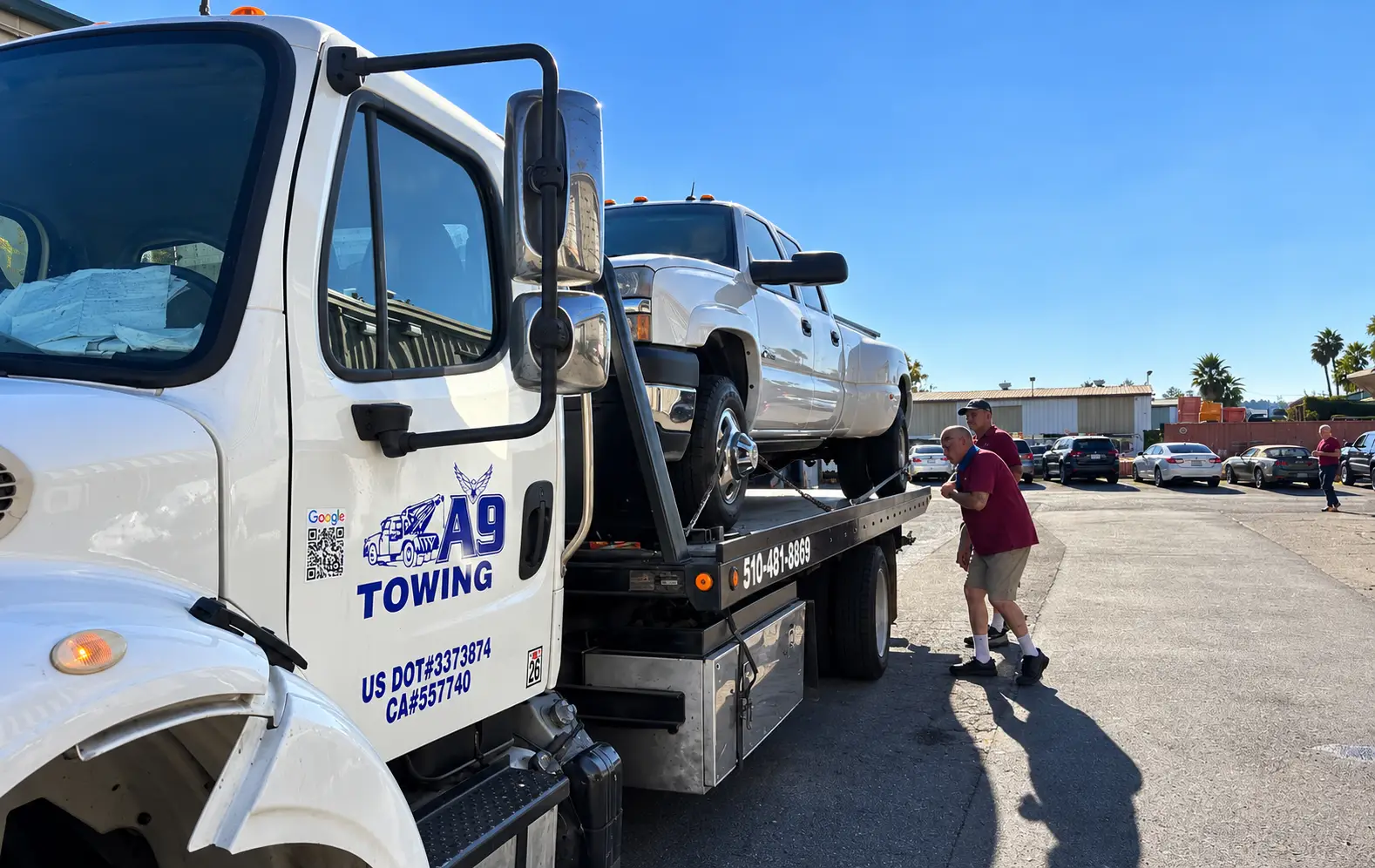
The Main Law: California Vehicle Code Section 22658
Most private property tows in California are covered by California Vehicle Code section 22658. It sets out when a property owner (or the person managing the property) can have a vehicle removed, what the tow company must do, and what happens if the rules are not followed. Below are the key points that matter most to everyday drivers and property owners.
Private Property Towing Rules in California: Signs Come First
In most cases, a car can only be towed from a private lot if there is a proper warning sign. Under section 22658, the sign generally must:
- Be posted in plain view at every entrance to the property.
- Be at least 17 by 22 inches, with letters at least one inch high.
- Say that public parking is not allowed and that vehicles will be removed at the owner’s expense.
- List the phone number of the local police and the name and phone number of each tow company the property has an agreement with.
There are some exceptions. For example, the law treats a lot with a single-family home differently, and there are separate rules for vehicles that already received a parking ticket on the property and were left there for a set time, or for vehicles missing major parts such as an engine or wheels. Because these exceptions have their own conditions, check the official text if one of them applies to you.
Someone From the Property Must Authorize the Tow
A tow company cannot just drive around a lot and take cars on its own. In general, the law requires written authorization from the property owner, the lessee or their employee or agent, and that person usually has to be present at the time and confirm the violation. The written authorization must include details such as the vehicle’s make, model, plate and VIN, the reason for the tow, and when the car was first seen parked there.
There are limited cases, such as cars parked within 15 feet of a fire hydrant, in a fire lane, or blocking an entrance or exit, where a property can give the tow company a written general authorization in advance. Even then, the tow company has to photograph the violation before towing and give the vehicle owner a copy when they pick up the car.
If your problem is a car blocking your own driveway, see our blocked driveway towing page for how that usually works.
Police Must Be Told About the Tow
Both sides have a duty to notify local law enforcement. The property owner or agent who authorizes the tow is expected to notify the local police within one hour of authorizing it, and the tow company must also report the tow soon after the vehicle is removed. This is why the first step after you discover your car is missing should be to call the local police non-emergency line. They can usually tell you whether your car was towed and which company has it, so you do not have to assume it was stolen.
Can I Stop the Tow if I Get Back in Time?
Often, yes. Under section 22658:
- If the vehicle has not yet been hooked up or lifted, the tow company generally must release it to the owner right away when asked.
- If the car is already hooked up or lifted but has not left the property, the tow company can charge no more than half of its regular towing fee to release it on the spot.
Stay calm, ask the driver politely to release the vehicle, and be ready to show that the car is yours.
Getting Your Car Back From Storage
If your car has already been taken, here is what the law generally says about the storage side:
- Distance: the storage yard usually has to be within 10 miles of where the car was towed from, unless local police have given the company prior written approval for a different location.
- Payment: the storage facility must accept cash or a valid bank credit card from the registered owner, legal owner or their agent, and must post a notice saying so.
- Hours: the yard must be open during normal business hours on weekdays and must also have a way to release vehicles after hours. A gate fee can be charged after hours, on weekends and on state holidays, but the law limits how much it can be.
- Charges: towing and storage charges that are higher than the rates approved by the local police or the CHP for that area can be treated as excessive.
Bring your driver’s license, the vehicle registration or title, and a payment method. Storage fees often add up daily, so it usually pays to pick the car up as soon as you can.
What if a Tow Breaks the Rules?
Section 22658 includes penalties when tows are done without the required signs, authorization or notices, or when charges are excessive. Depending on what went wrong, the property owner or the tow company can be responsible for extra charges or for damage to the vehicle. If you believe your car was towed illegally, write down what happened, take photos of the signs (or the lack of them), keep your receipts, and contact your local police department or a lawyer for advice. Some cities also have their own towing rules or complaint processes.
Tips for East Bay Property Owners and Managers
- Check your signs. Make sure they are at every entrance, the right size, easy to read and list current phone numbers.
- Keep good records. Note when a vehicle was first seen, take photos and keep copies of every written authorization.
- Know your local rules. Cities such as Oakland, Hayward or San Leandro may have extra requirements on top of state law. Your local police department is a good place to ask.
- Work with a towing company you trust. A9 Towing Company provides private property towing services and abandoned vehicle towing for property owners and managers in San Lorenzo, Hayward, San Leandro, Oakland and other East Bay cities.
Frequently Asked Questions
Can my car be towed from a private lot without a sign in California?
In most cases, a proper sign is required at every entrance before a car can be towed from private property. There are some exceptions, such as a lot with a single-family home, so check California Vehicle Code section 22658 or ask your local police about your situation.
How do I find out where my car was towed?
Call your local police department’s non-emergency number. The property owner and the tow company are required to notify local law enforcement about private property tows, so the police can usually tell you which company has your vehicle.
Can I stop a tow truck from taking my car?
If the car has not been hooked up or lifted yet, the tow company generally must release it when the owner asks. If it is already hooked up but still on the property, the company can charge no more than half of its regular towing fee to release it.
Does the storage yard have to accept credit cards?
Yes. Under California law, the storage facility must accept cash or a valid bank credit card from the registered owner, legal owner or their agent, and it must post a notice saying so.
Is this article legal advice?
No. This is general information to help you understand the basics. Laws change and local rules can apply, so read the official law, contact your local police department or speak with a lawyer about your own case.
Need Help With Towing in the East Bay?
Whether you manage a property and need a towing partner, or your own car needs a tow, A9 Towing Company is available 24/7. Call (510) 200-9900 to talk to our team. You can also read our guide on choosing a reliable towing company in the East Bay.