
When you call for a tow, the dispatcher will often ask what you drive before sending a truck. That is because there are two common ways to tow a car: on a flatbed or with a wheel-lift. Both are safe when used on the right vehicle, but they are not interchangeable. This guide explains flatbed vs wheel-lift towing in plain language, so you know which one your car needs and what to ask for.
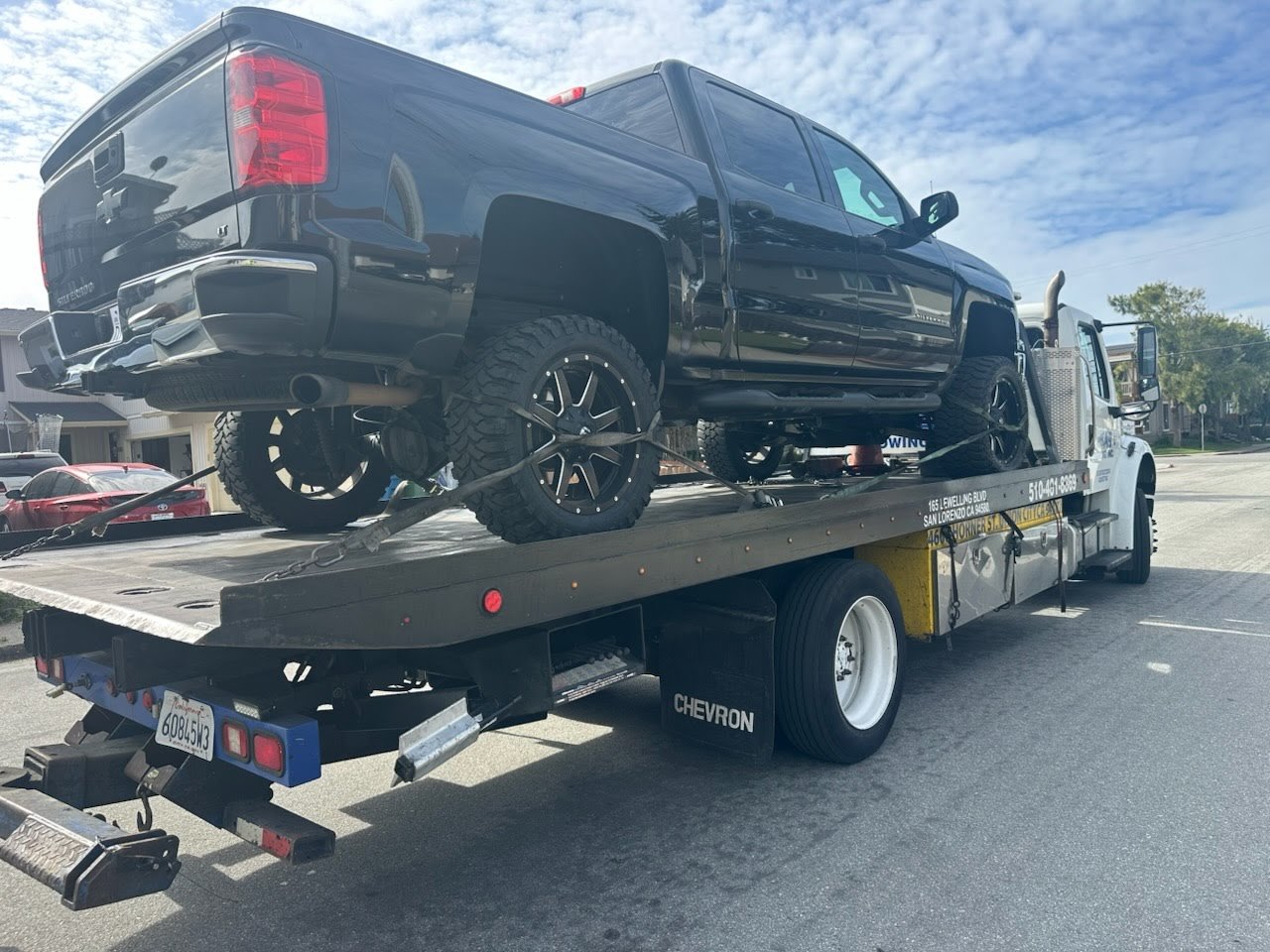
What Is Flatbed Towing?
A flatbed tow truck has a long, flat bed that tilts down to the ground like a ramp. The vehicle is pulled or driven up onto the bed, strapped down at the wheels, and the bed is leveled again. The whole vehicle rides on the truck with all four wheels off the road, so its tires, drivetrain and suspension do no work during the trip.
Because of that, a flatbed is the gentlest option for most vehicles. It is also the usual choice after a crash, when wheels or steering may be damaged. Learn more about our flatbed towing service.
What Is Wheel-Lift Towing?
A wheel-lift truck uses a metal cradle, often called a yoke, that slides under the front or rear tires. The truck lifts that end of the car off the ground, and the car rolls behind the truck on its other two wheels. The cradle holds the tires rather than the bumper or frame, which is why modern wheel-lifts are much kinder to cars than the old chain-and-hook trucks.
A wheel-lift needs much less space than a flatbed, so it can reach cars in parking garages, tight apartment lots and narrow streets. It is also quick to hook up. See our wheel-lift towing page for how it works.
Flatbed vs Wheel-Lift Towing: The Key Differences
- Wheels on the road: a flatbed carries all four wheels off the ground; a wheel-lift leaves two wheels rolling.
- Space needed: a flatbed needs room to tilt its bed and load the car; a wheel-lift fits into tighter spots.
- Best trips: a flatbed suits longer trips and damaged or valuable vehicles; a wheel-lift suits short local tows of everyday cars.
- Drivetrain: with a flatbed, the drivetrain does not turn at all; with a wheel-lift, the wheels left on the road turn, so it matters which end is lifted.
When You Should Ask for a Flatbed
A flatbed is usually the safer choice for:
- All-wheel-drive and many four-wheel-drive vehicles. Rolling some wheels while others are lifted can strain the drivetrain. Always check your owner’s manual for the maker’s towing instructions.
- Most electric and hybrid cars. Many makers say the drive wheels should not turn while the car is towed. Your owner’s manual will say how the car should be transported.
- Low, lowered or sports cars that could scrape their bumpers or bodywork when one end is lifted.
- Vehicles damaged in an accident, especially with bent wheels, flat tires or steering damage. See our accident towing page.
- Long trips out of the area. See long distance towing.
- Motorcycles, which need a proper bed and tie-downs. See motorcycle towing.
When a Wheel-Lift Is a Good Choice
- A front-wheel-drive car that is being towed a short distance with its front wheels lifted.
- A car stuck in a garage, a narrow driveway or a tight lot where a flatbed cannot easily load it.
- A quick move of a non-running car to a nearby mechanic.
- Removing an unauthorized vehicle from private property, where the truck needs to work in a small space.
If you are not sure, tell the dispatcher the make, model and drive type. A good towing company picks the truck to fit the vehicle, not the other way around.
What to Tell the Tow Company When You Call
- Year, make and model, and whether the car is front-, rear- or all-wheel drive, or electric.
- Whether the car was in an accident, and which wheels or parts look damaged.
- Where it is parked: street, garage (and its height limit, if posted), driveway or lot.
- Where it needs to go, such as a repair shop, dealership or your home.
Frequently Asked Questions
Is flatbed towing better than wheel-lift towing?
Not always. A flatbed is gentler because the whole vehicle rides off the ground, so it is the better choice for AWD cars, most EVs, low cars, damaged vehicles and long trips. For a short local tow of a front-wheel-drive car, or a car in a tight space, a wheel-lift is often quicker and works well.
Can an all-wheel-drive car be towed with a wheel-lift?
In most cases an all-wheel-drive car should go on a flatbed, because rolling some wheels while others are lifted can strain the drivetrain. Check your owner’s manual and tell the tow company that your car is AWD.
Do electric cars need a flatbed?
Many electric car makers say their cars should be moved with the drive wheels off the ground, which usually means a flatbed. Check your owner’s manual and mention that your car is electric when you call.
Does a wheel-lift damage the car?
When the right end is lifted and the tires are secured in the cradle, a wheel-lift tow is a normal, safe way to move many everyday cars. Problems are more likely when a wheel-lift is used on a vehicle that should be on a flatbed, which is why the dispatcher asks about your car.
Which costs more, a flatbed or a wheel-lift tow?
There is no single fixed price for either. The cost depends on the vehicle, the distance, the time of day and the situation at the pickup spot. Ask the tow company to explain your options before the job starts.
Need a Tow in the East Bay? Call A9 Towing Company
A9 Towing Company provides 24/7 towing and roadside assistance from our base in San Lorenzo across the East Bay, including Oakland, Hayward and San Leandro. Tell us what you drive and we will send the right truck. Call (510) 200-9900.
This article is general information. Always follow your vehicle maker’s towing instructions in the owner’s manual.