
Knowing what to do after a car accident makes a stressful moment easier to handle. In the minutes before the tow truck arrives, the steps you take protect your safety, your health and your insurance claim. This guide walks East Bay drivers through those first minutes, from turning on your hazard lights to telling the tow company where your car should go.
If anyone is hurt, call 911 first. Everything else can wait.
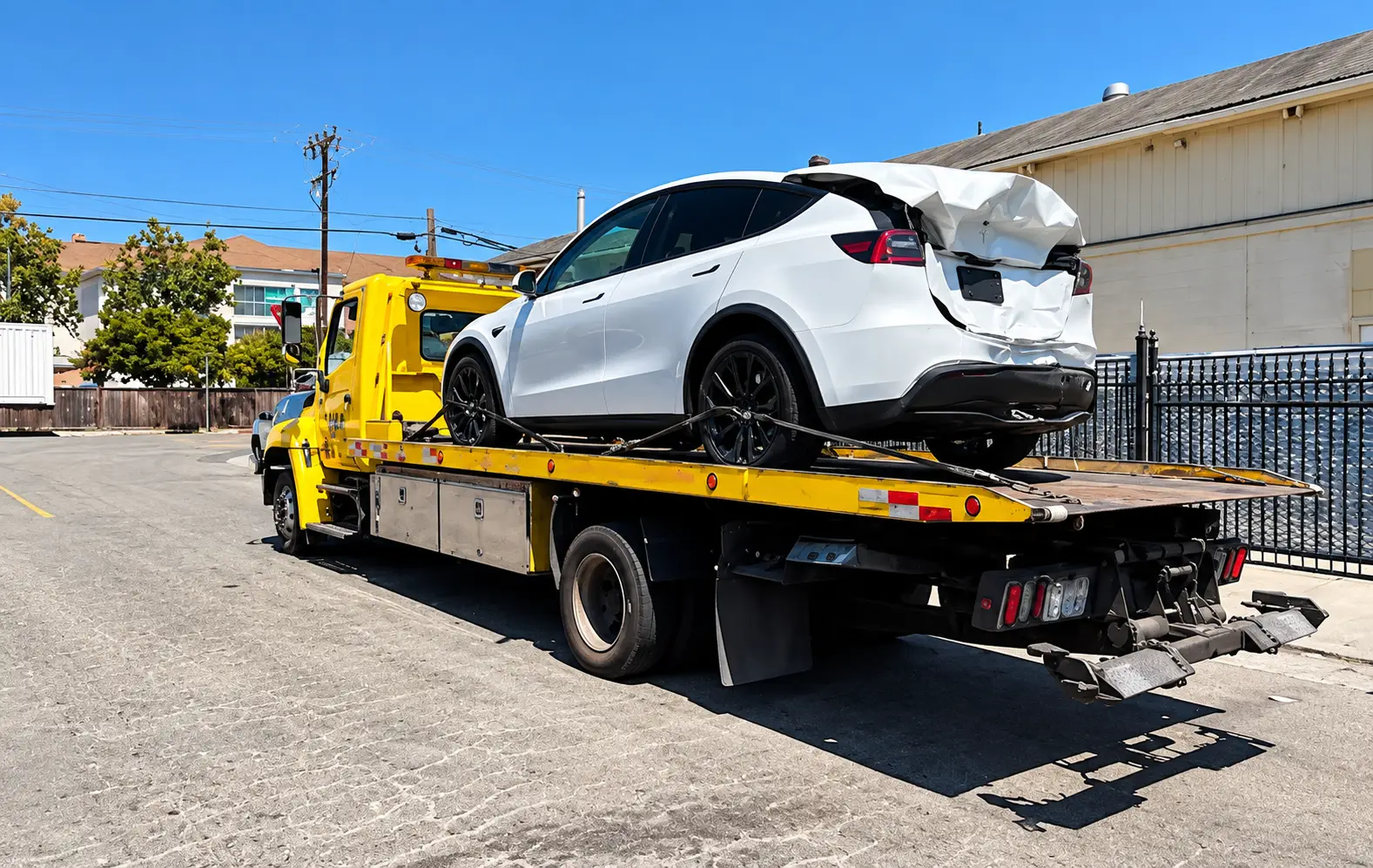
What to Do After a Car Accident: The First Five Minutes
1. Stop and check for injuries
Stop your car as soon as it is safe. Check yourself and your passengers for injuries, then check on the people in the other vehicle if you can do so safely. In California, drivers involved in a collision must stop, and if someone is injured, call for help.
2. Make the scene visible
Turn on your hazard lights right away. If you carry flares or reflective triangles and it is safe to step out, place them behind your car to warn other drivers. At night or in rain, this matters even more.
3. Move out of traffic if you can
If the accident is minor, nobody is hurt and your car still drives, move it to the shoulder, a side street or a parking lot. On busy roads such as I-880 or I-580, staying in a live lane puts you at risk of a second collision. If the car cannot move, or anyone is injured, leave it where it is, stay buckled in or move well away from traffic, and wait for help.
4. Call 911 or the police when needed
Call 911 if anyone is injured, if a vehicle is blocking traffic, if a driver seems impaired, or if the other driver leaves the scene. For a minor collision with no injuries, you can call the local police non-emergency line if you want an officer to make a report.
Document the Accident While You Wait
Once everyone is safe, use the waiting time to collect the details your insurance company will ask for.
- Exchange information: names, phone numbers, driver’s license numbers, license plates, and insurance company and policy numbers with the other driver.
- Take photos: all sides of every vehicle, the damage up close, the license plates, the road, traffic signs and any skid marks.
- Note the location: street names and cross streets, or the freeway, direction and nearest exit.
- Talk to witnesses: ask for their names and phone numbers.
- Stay calm and stick to facts: avoid arguing about who was at fault at the scene.
In California, you must report a collision to the DMV within 10 days if anyone was injured or killed, or if property damage was more than $1,000. Your insurance company or the California DMV website can explain the SR-1 report.
Calling for a Tow After an Accident
If your car is not safe to drive, for example because of leaking fluids, a damaged wheel, broken lights or deployed airbags, it should be towed. When you call a tow company, have this ready:
- Your exact location and which direction you are facing.
- The make and model of your vehicle, and whether it is all-wheel drive or electric.
- What is damaged: wheels, front end, rear end, or whether the car can still roll.
- Where you want the car taken: your home, a body shop, a dealership or a location your insurer chooses.
Cars with heavy front or rear damage, all-wheel-drive cars and electric vehicles are often best moved with flatbed towing, because all four wheels ride on the truck bed. If your claim is going through insurance, our insurance towing page explains how we can help, and our accident towing page explains how we move cars after a collision.
Before the Tow Truck Leaves With Your Car
- Take your personal items, documents, garage remotes and any child seats out of the car.
- Confirm the destination address with the tow operator.
- Ask how the cost is worked out. Towing cost depends on your vehicle, the distance, the time of day and the situation.
- Keep any paperwork you receive for your insurance claim.
Frequently Asked Questions
Should I move my car after an accident?
If nobody is hurt and the car can be driven safely, move it out of traffic to the shoulder or a nearby side street. If anyone is injured or the car cannot move, leave it in place, turn on your hazard lights and wait for help.
Do I have to call the police after a minor accident in California?
Call 911 if anyone is injured, the road is blocked or the other driver leaves. For a minor collision without injuries, a police report is not always required, but you must exchange information with the other driver, and you must report the collision to the DMV within 10 days if anyone was hurt or damage was more than $1,000.
Can I choose where my car is towed after an accident?
In most cases, yes. Tell the tow company the address of your home, body shop or dealership. If your insurance company has a preferred shop, you can ask them before the car is moved.
What kind of tow truck is best after an accident?
A flatbed is usually the safest choice for cars with collision damage, all-wheel-drive cars and electric vehicles, because the whole vehicle rides on the truck bed instead of rolling on damaged wheels.
How much does towing after an accident cost?
There is no single fixed price. The cost depends on your vehicle, the distance, the time of day and the situation. Call the tow company with your location and destination to hear your options.
Need a Tow After an Accident in the East Bay?
A9 Towing Company provides 24/7 towing services across the East Bay, including towing in Oakland, Hayward and San Leandro. If you have been in an accident and your car needs to be moved, call us at (510) 200-9900.
This article is general safety information, not legal advice. For questions about your claim, contact your insurance company.