
If your car broke down on the freeway, the first few minutes matter most. Bay Area freeways like I-880, I-580, I-238 and I-680 carry fast, heavy traffic close to the shoulder, so the goal is simple: get as far out of traffic as you can, stay visible and call for the right help. This guide walks you through what to do, step by step, in plain language.
1. Signal and Get to the Right Shoulder
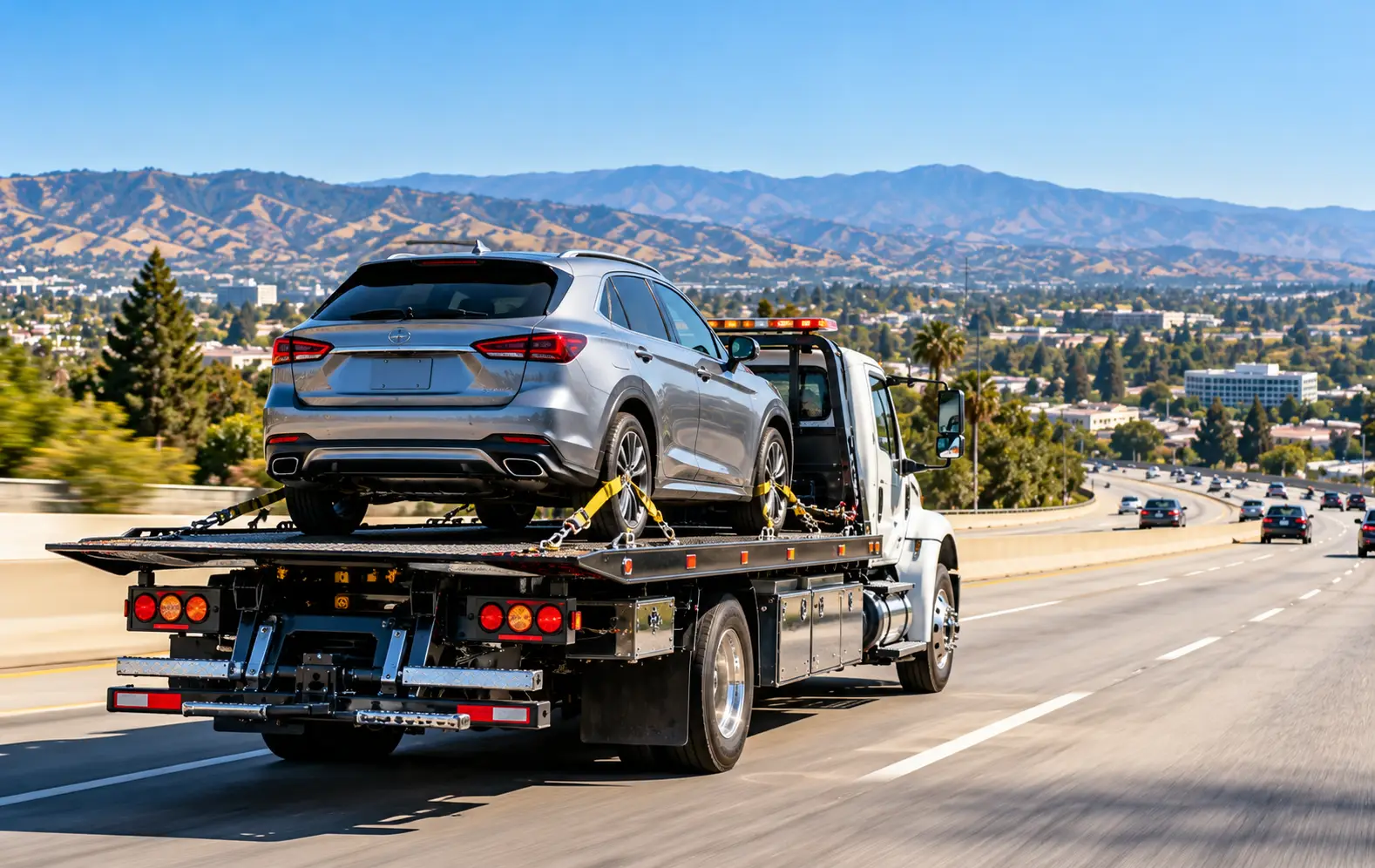
As soon as you notice a problem, such as a warning light, a loud noise, smoke, a flat tire or a loss of power, turn on your hazard lights. Then, if the car still moves, ease over to the right shoulder, as far from the traffic lanes as you can. If an exit is close and the car can still drive safely, taking the exit and stopping in a parking lot or a quiet side street is usually safer than stopping on the freeway.
Try not to stop on the left shoulder or in the center divider unless you have no other choice. Getting out from there means crossing live lanes.
2. Decide: Stay in the Car or Get Out?
On most freeways, the safest place is usually inside your car with your seatbelt on and the doors locked, especially if traffic is passing close to you. If you can get out on the side away from traffic and there is a safe place to stand well behind a guardrail or barrier, that can be safer. Never stand behind or right next to your car, and never walk across the lanes.
If you see smoke or fire, get everyone out on the side away from traffic, move well away from the car and call 911.
3. Call 911 When It Is an Emergency
Call 911 first if anyone is hurt, if your car is stuck in a traffic lane, if it is on fire, or if you feel unsafe where you are. On California freeways, the California Highway Patrol (CHP) handles traffic emergencies and can help make the scene safer.
During busy traffic hours, the Bay Area’s free Freeway Service Patrol also helps stranded drivers on many freeways, for example with a jump start or a gallon of gas. You can call 511 and say “Freeway Assist”. If your car needs to go to a repair shop, you will usually still need to arrange a tow.
4. Know Exactly Where You Are
When you call for help, the most useful thing you can give is your location. Look for:
- The freeway number and your direction (for example, I-880 northbound).
- The last exit you passed or the next exit sign ahead.
- Small mile marker or postmile signs along the shoulder.
- Landmarks such as an overpass, a large store or a bridge.
Your phone’s map app can also show your location. Share it with the dispatcher if you can.
5. Call a Tow Company and Tell Them the Right Details
Once you are safe, call a towing company. To help them send the right truck, tell them:
- Your exact location and direction of travel.
- The year, make and model of your car, and whether it is all-wheel drive, electric or hybrid. Many of these should go on a flatbed. Our guide on flatbed vs wheel-lift towing explains why.
- What happened: a flat tire, a dead battery, overheating, out of gas, or an accident.
- Where you want the car to go, such as a repair shop, a dealership or your home.
For a full step-by-step checklist, see our guide on what to tell the dispatcher when you call for a tow.
Sometimes a tow is not needed at all. A flat tire change, a jump start or fuel delivery can get you moving again, as long as it can be done safely at the roadside.
6. Breaking Down at Night or in Bad Weather
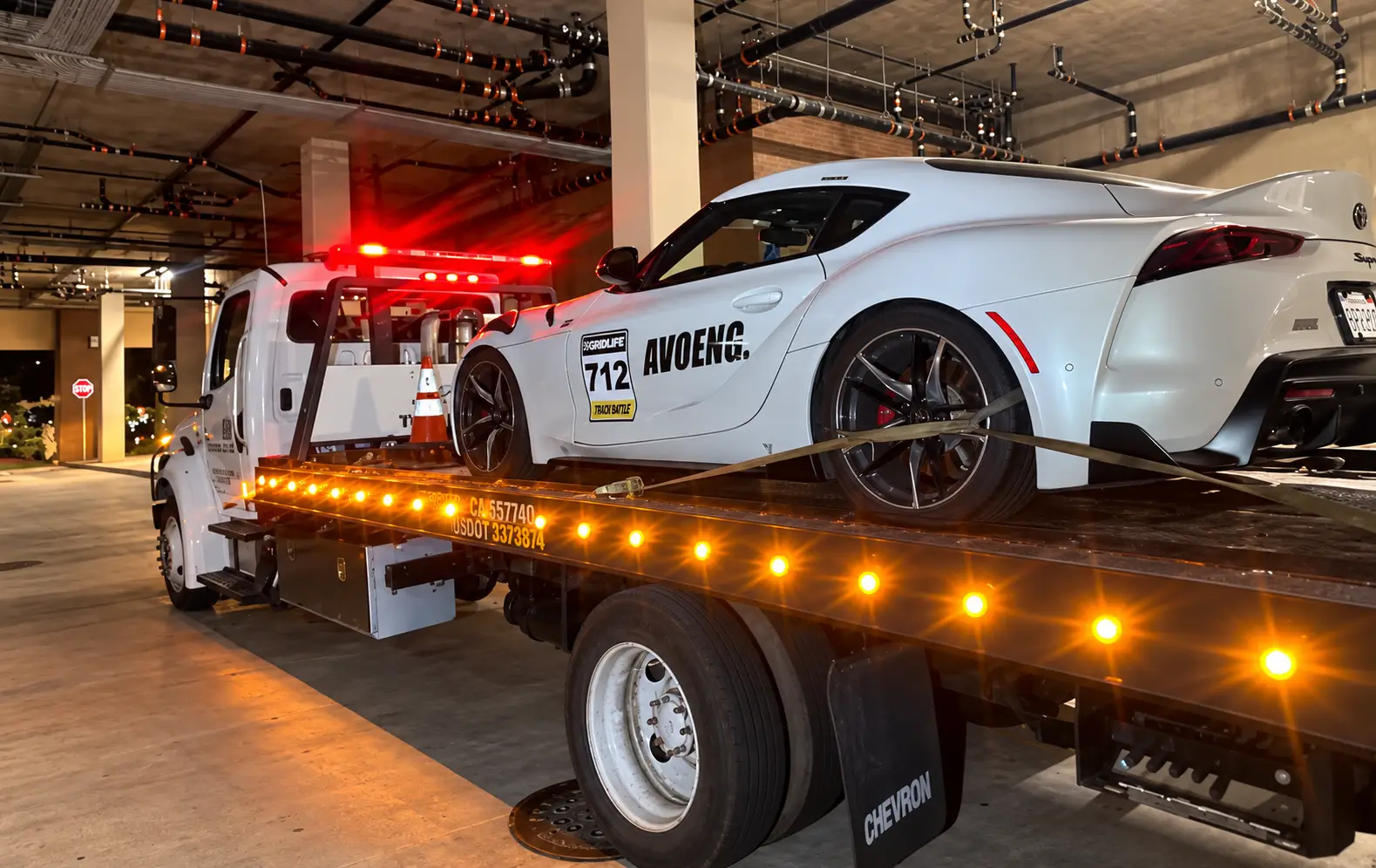
At night or in rain and fog, other drivers have less time to see you. Keep your hazard lights on, and leave your parking lights on if your battery allows. If you have reflective triangles or flares and it is safe to place them behind the car without walking into traffic, use them. Otherwise, stay in the car with your seatbelt on until help arrives.
7. What Not to Do
- Do not try to change a tire on the traffic side of the car.
- Do not open the hood of an overheated engine or remove a hot radiator cap.
- Do not accept a ride from a stranger. Wait for the help you called.
- Do not try to push the car across lanes.
Prevent the Next Freeway Breakdown
Many breakdowns start with small warning signs. Keep an eye on your fuel gauge and temperature gauge, check tire pressure regularly, and replace an aging battery before it fails. Long climbs like the Altamont Pass on I-580 and hot summer days in the Tri-Valley are hard on cooling systems, so pay attention to the temperature gauge on those stretches.
Frequently Asked Questions
Should I stay in my car if it breaks down on the freeway?
Usually, yes. If traffic is passing close by, staying in the car with your seatbelt on is often the safest choice. Get out only if you can exit on the side away from traffic and stand well behind a barrier, or if there is smoke or fire.
Who should I call first when my car breaks down on the freeway?
Call 911 first if anyone is hurt, your car is blocking a lane, it is on fire or you feel unsafe. If you are safely on the shoulder and no one is hurt, you can call a towing company directly.
What is the Freeway Service Patrol?
The Freeway Service Patrol is a free roadside help program on many Bay Area freeways during busy traffic hours. Its trucks can help with simple problems such as a jump start or a gallon of gas and can clear stalled cars from traffic. If your car needs to go to a repair shop, you will usually still need to arrange a tow.
How much does a tow from the freeway cost?
There is no single fixed price. The cost depends on your vehicle, the distance, the time of day and the situation at the roadside. Ask the tow company to explain your options before the job starts.
Can a tow truck pick up my car from the freeway shoulder?
Yes. A tow truck can load your car from the shoulder and take it to the shop or address you choose. Give the dispatcher your direction of travel and the nearest exit so the driver can find you.
Broken Down in the East Bay? Call A9 Towing Company
A9 Towing Company provides 24/7 towing and roadside assistance from our base in San Lorenzo across the East Bay, including Hayward, Oakland, Alameda and Livermore. If your car was damaged in a crash, see our accident towing page. For trips farther away, ask about long distance towing. Call (510) 200-9900.
This article is general safety information. In an emergency, always call 911 and follow instructions from the CHP and emergency services.