
Can you drive on a flat tire? The short answer is: only as far as it takes to get off the road safely. A tire with little or no air cannot hold the car up properly, so every extra block you drive can ruin the tire, bend the wheel and make the car harder to control. This guide explains what is really happening when a tire goes flat, what to do in the first few minutes, and when a flat tire change or a tow is the better choice.
Can You Drive on a Flat Tire at All?
You can move a car with a flat tire a very short distance, at very low speed, to get out of a traffic lane or off a freeway. That is about it. Driving any further is a bad idea for three reasons:
- Safety: a flat tire changes how the car steers and brakes. The car may pull to one side, and in an emergency stop it may not stop straight.
- Damage to the tire: when a tire runs with no air, the sidewall is crushed between the wheel and the road. Even a short drive can damage it so badly that it cannot be repaired, even if the original problem was just a small nail.
- Damage to the car: keep going and the wheel rim can hit the road. That can bend or crack the wheel and put extra stress on brakes and suspension parts.
In other words, driving on a flat often turns a simple tire repair into a new tire, a new wheel or more.
How to Tell You Have a Flat
Sometimes it is obvious: a loud bang, a flapping sound or the car suddenly pulling hard to one side. Other times the signs are quieter:
- The tire pressure warning light comes on in the dashboard.
- The steering feels heavy or the car drifts to one side on a straight road.
- You hear a rhythmic thumping or feel more vibration than usual.
- The car looks lower on one corner when you walk up to it.
A slow leak is easy to miss. If the warning light comes on, check the tires at the next safe stop instead of waiting until the end of your trip.
What to Do in the First Few Minutes
- Stay calm and hold the wheel firmly. Do not slam on the brakes. Ease off the gas and let the car slow down.
- Turn on your hazard lights.
- Get to a safe spot. On a freeway such as I-880, I-580 or I-238, move slowly to the right shoulder or take the next exit. On a city street, pull into a parking lot or a wide, level spot away from traffic.
- Stop on flat, firm ground if you can. Soft dirt or a slope makes changing a tire much harder and less safe.
- Stay safe while you decide what to do. On a freeway shoulder, it is usually safest to stay in the car with your seatbelt on. If you are blocking a lane, anyone is hurt or you feel unsafe, call 911 first.
We cover freeway safety in more detail in our guide on what to do when your car breaks down on a Bay Area freeway.
What About Run-Flat Tires?
Some cars come with run-flat tires. These have stiffer sidewalls that let you keep driving for a limited distance after losing air, so you can reach a shop instead of stopping on the shoulder. But “run-flat” does not mean “drive as normal”. Each tire maker sets a maximum speed and distance, and these are usually printed in your owner’s manual. Once that limit is reached, the tire can still fail.
If you are not sure whether your car has run-flats, look in the owner’s manual or on the tire sidewall. If you are unsure, treat it as a regular tire and stop.
Driving on a Spare Tire
If your car has a spare, changing to it is often the fastest way to get moving again. Keep in mind:
- Compact spares (“donuts”) are temporary. They usually have a lower speed limit and a shorter distance limit than a full-size tire. These limits are often printed on the spare itself.
- Check the spare’s air. A spare that has been sitting in the trunk for years may be low or flat too.
- Get the original tire repaired or replaced soon. A spare is meant to get you to a tire shop, not to stay on the car for weeks.
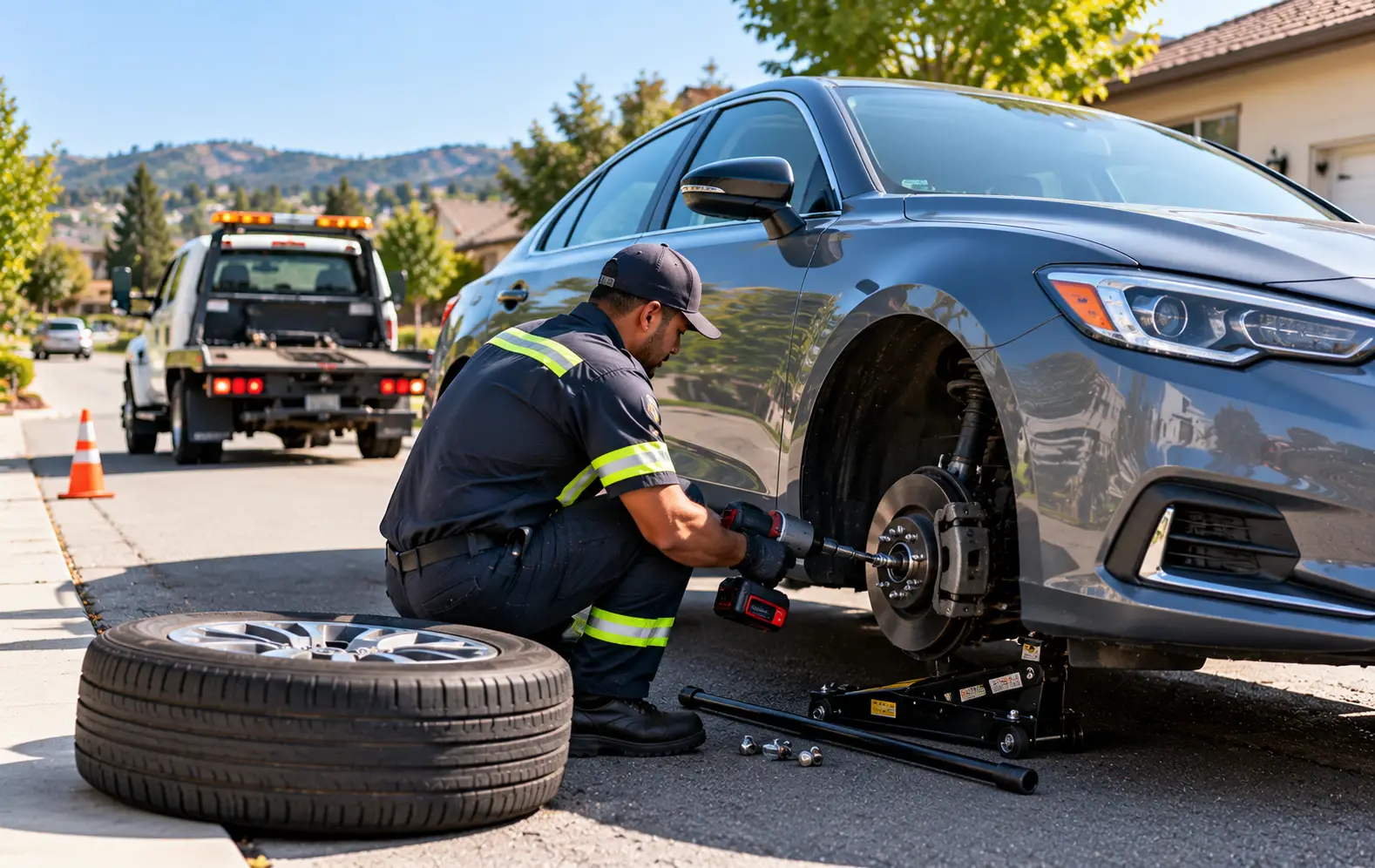
If you do not have the tools, the lug nuts will not come off, or you are on a busy road, it is safer to let a professional do it. Our team can come out for a flat tire change using your spare.
When a Flat Tire Means You Need a Tow
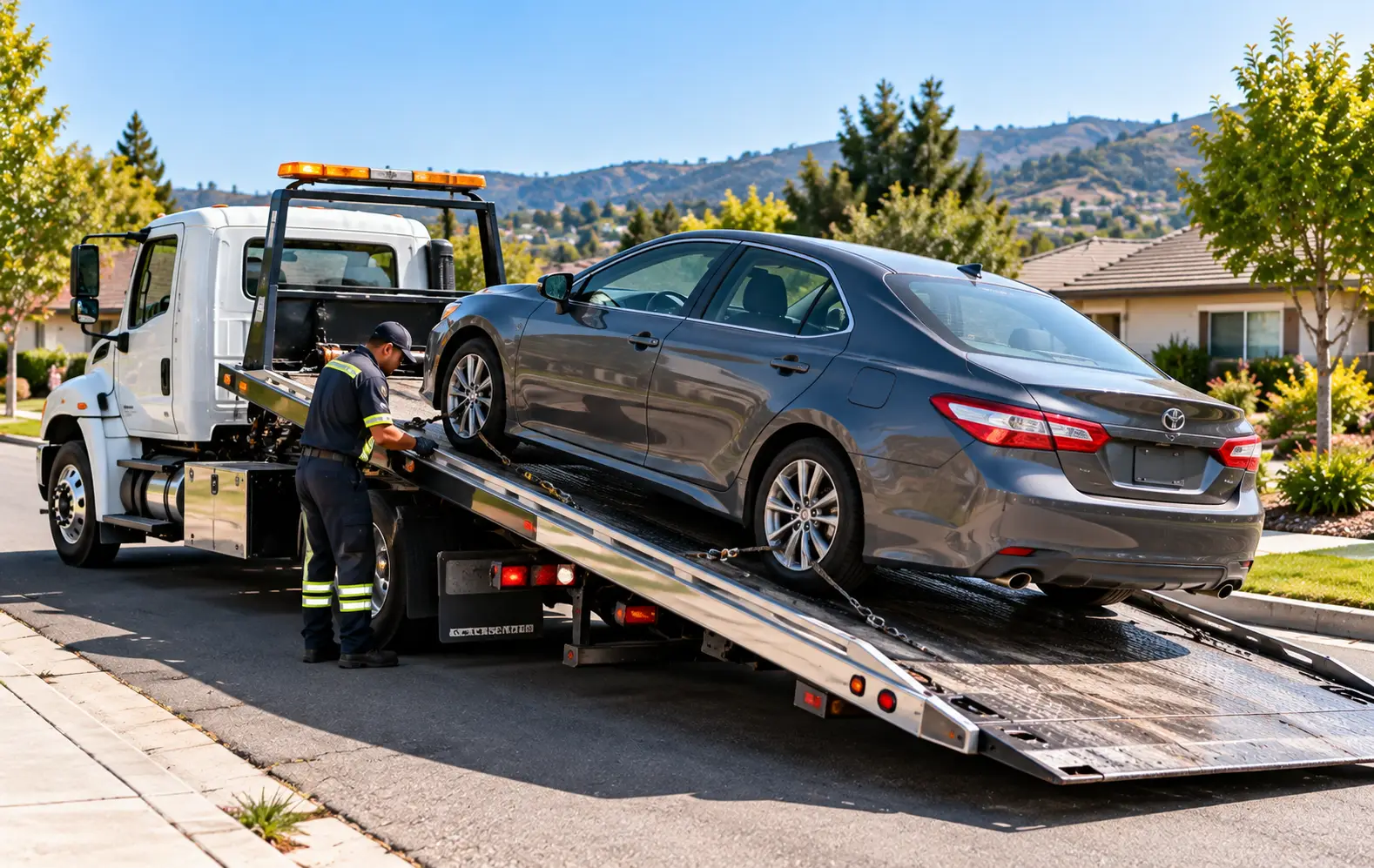
A tire change is not always possible. In these cases a tow is usually the safer choice:
- There is no spare. Many newer cars, including a lot of electric vehicles, come with only a repair kit or no spare at all.
- The spare is flat or damaged.
- More than one tire is flat, for example after hitting a pothole or debris on the freeway.
- The wheel is bent or cracked, or the car was driven on the flat for a long way.
- The car is in an unsafe spot where changing a tire would put you close to traffic.
- A wheel lock key is missing and the wheel cannot be removed.
For cars that should not roll on a damaged wheel, or for EVs and all-wheel-drive vehicles, a flatbed tow is often the best option. Read flatbed vs wheel-lift towing to see the difference.
Do Tire Sealant Kits Work?
Many cars now come with a small compressor and a can of sealant instead of a spare. These kits can seal a small puncture in the tread, such as a nail hole, well enough to get you to a tire shop. They usually will not fix a cut sidewall, a large hole or a tire that has come off the rim. Follow the instructions on the kit, and tell the tire shop you used sealant so they can clean it out before repairing the tire.
How to Lower the Chance of a Flat
- Check tire pressure about once a month, when the tires are cold, using the numbers on the sticker inside the driver’s door.
- Look at your tires for nails, cuts, bulges or worn tread.
- Check that your spare has air and that the jack and wrench are in the car.
- Slow down for potholes and debris, especially on busy freeways at night.
Flat Tire? A9 Towing Can Help
If you get a flat anywhere in the East Bay, from San Lorenzo and Hayward to Oakland, Fremont and Dublin, A9 Towing Company can help 24/7. We can change your tire using your spare, or tow your car to the tire shop or garage you choose. There is no fixed price; the cost depends on your vehicle, the distance, the time and the situation, and we explain the options before we send a truck.
Car will not start as well? See our guide car won’t start: jump start, new battery or tow, or ask about our jump start service.
Stuck with a flat right now? Call A9 Towing Company at (510) 200-9900.
Flat Tire FAQ
How far can you drive on a flat tire?
Only as far as you need to get safely off the road, at very low speed. Driving further can ruin the tire and damage the wheel, brakes and suspension.
Can driving on a flat tire damage my wheel?
Yes. With no air in the tire, the wheel rim can hit the road. This can bend or crack the wheel, which then has to be repaired or replaced.
How fast can I drive on a compact spare tire?
Compact spares usually have a lower speed limit and a shorter distance limit than normal tires. Check the limit printed on the spare or in your owner’s manual, and replace it with a full-size tire soon.
What if my car has no spare tire?
Use the sealant kit if the puncture is small and in the tread. If the damage is bigger, the kit does not work or you do not feel safe, call for a tow to a tire shop.
Can A9 Towing change my flat tire?
Yes. We offer 24/7 flat tire changes using your spare across the East Bay, and we can tow your car to a tire shop if a change is not possible. Call (510) 200-9900.
This guide is general information for drivers. Always follow your vehicle’s owner’s manual and the instructions printed on your tires, spare and repair kit.