
Most breakdowns happen at the worst time: on the way to work, late at night, or on a busy stretch of I-880. A simple roadside emergency kit in your trunk will not fix every problem, but it can keep you safer, more comfortable and easier to find while help is on the way. This guide lists what East Bay drivers should keep in the car, why each item matters, and how to use it when something goes wrong.
Safety first: if anyone is hurt, if you are stopped in a live traffic lane, or if you feel unsafe, call 911 before anything else.
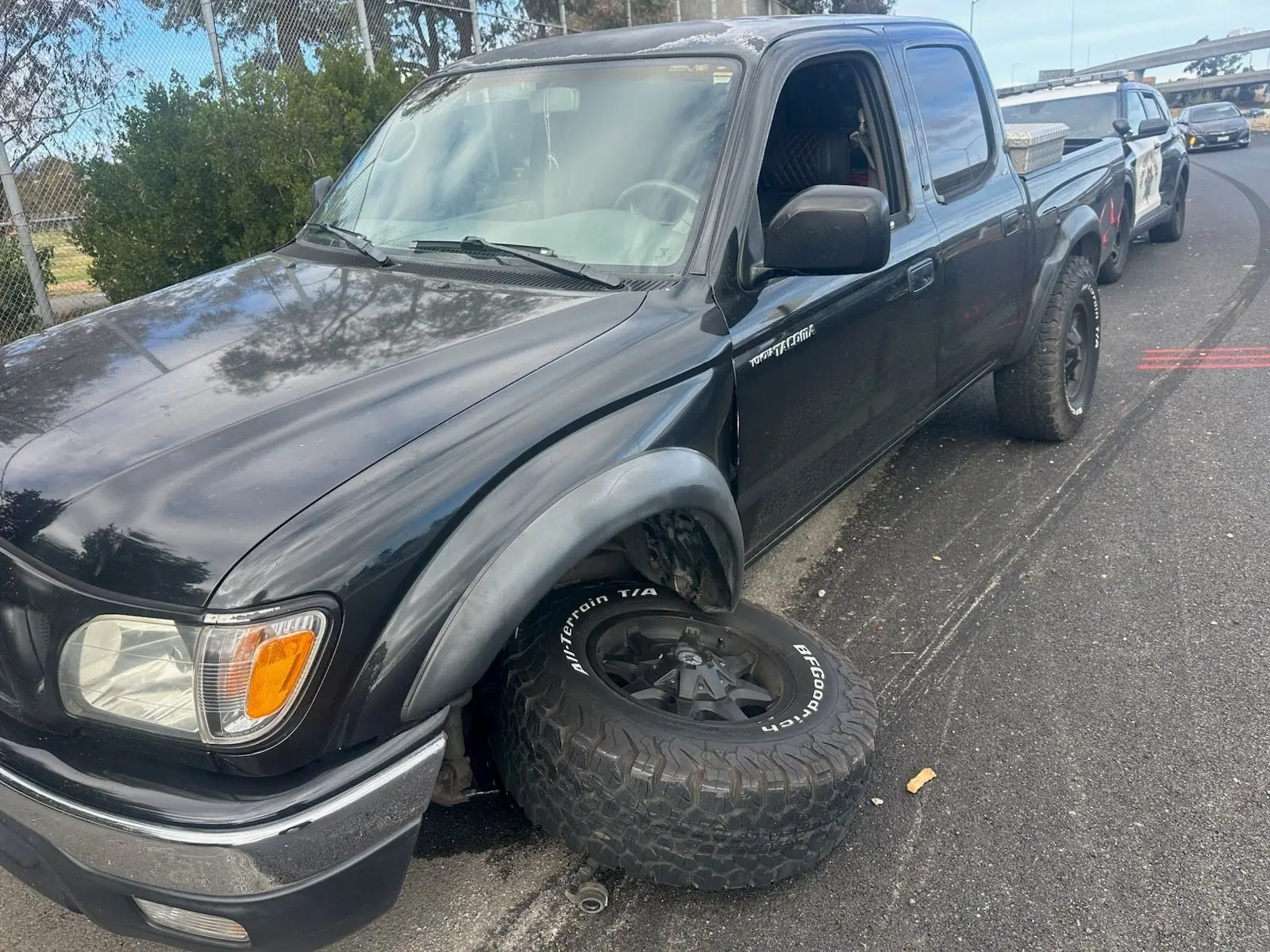
Why Every Car Needs a Roadside Emergency Kit
A dead battery, a flat tire or an empty tank can leave you waiting on the shoulder or in a parking lot. In the East Bay, that wait might be on a freeway in fast traffic, on a dark side street, or in a hot parking lot in the Tri-Valley. A small kit helps you do three things: stay visible, stay in touch and stay comfortable until a tow truck or roadside technician arrives.
Safety and Visibility Items
- Reflective warning triangles or LED road flares. Placed behind your car (only when it is safe to walk there), they warn other drivers early.
- A bright flashlight or headlamp with spare batteries. A headlamp keeps both hands free if you need to look under the hood or find the spare.
- A reflective safety vest. It makes you much easier to see if you have to step out of the car at night or in fog.
- Your hazard lights. Not something you pack, but the first thing to turn on. Make sure you know where the button is.
Basic Car Tools for the Most Common Problems
- Jumper cables or a portable jump starter. A charged jump pack lets you start the car without another vehicle. If the car still will not start, our guide on car won’t start: jump start, new battery or tow explains what to try next, or call for a jump start service.
- A tire pressure gauge and a small 12-volt air compressor. Many “flats” are slow leaks that can be topped up enough to reach a safe spot.
- Your spare tire, jack and lug wrench. Check the spare’s pressure a few times a year. Some newer cars have no spare at all, only a repair kit, so look in your trunk before you need it. Read can you drive on a flat tire? before you try to keep going, or call for a flat tire change.
- Work gloves and a few rags. Engines, wheels and batteries are dirty and can be hot.
- Duct tape, zip ties and a multi-tool. Useful for a loose bumper piece or a dangling part so you can get off the road safely.
Phone Power and Communication
- A car phone charger and a charged power bank. Your phone is how you call for help, share your location and talk to the tow driver.
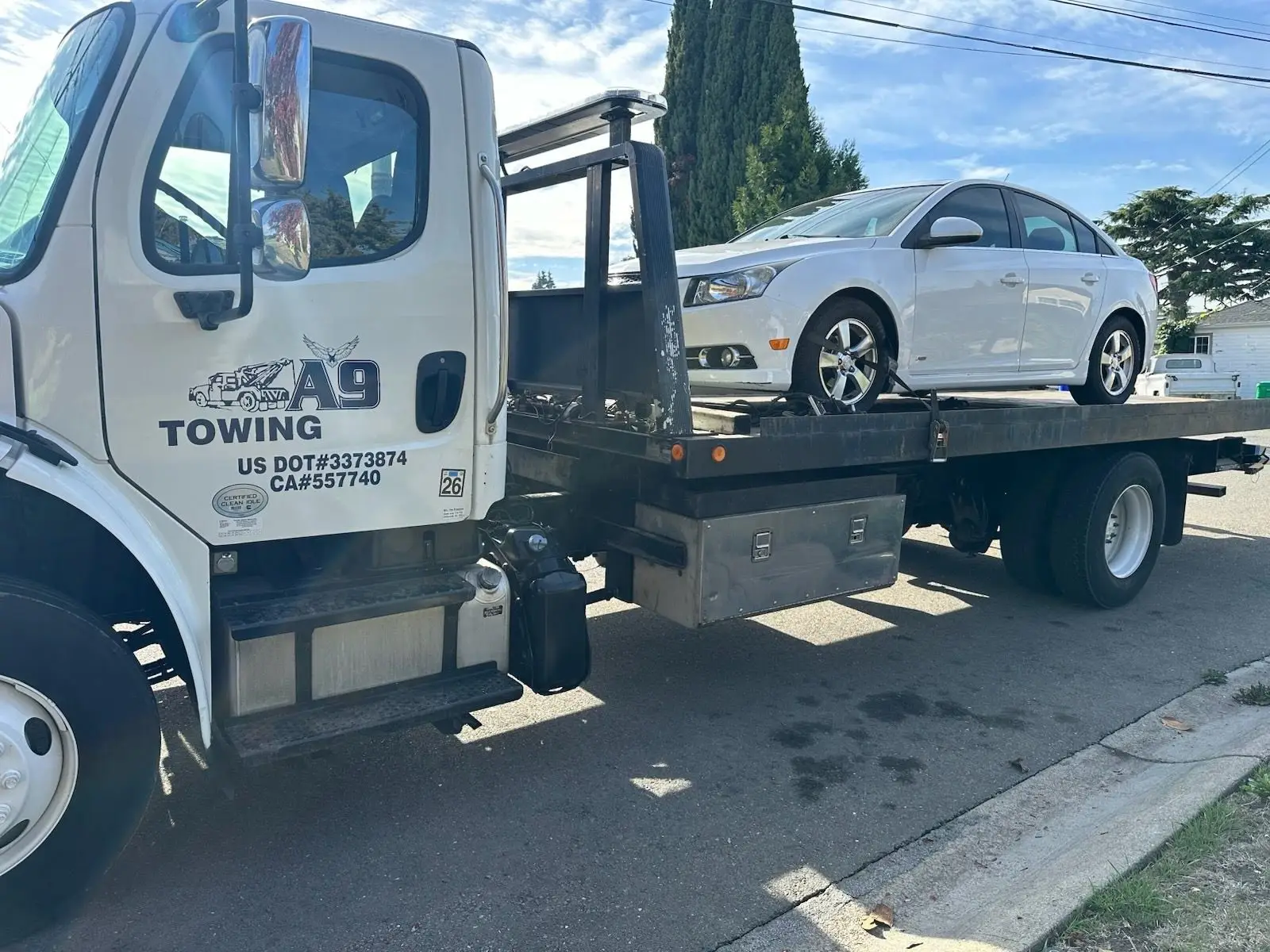
- A written list of important numbers in the glove box: a family member, your insurance company, your mechanic and a towing company. Save A9 Towing Company at (510) 200-9900 too.
- A pen and small notebook for writing down information after an accident or a quote from a tow company.
When you call, a few details make a big difference. See what to tell the dispatcher when you call for a tow.
Comfort and First Aid
- A basic first aid kit with bandages, antiseptic wipes and any personal medicine you may need.
- Bottled water and a few snacks that will not spoil. Swap them out every few months, because cars get hot in summer.
- A warm layer or a small blanket. Bay Area nights get cool and damp, even when the day was warm.
- A small umbrella or rain jacket for the rainy months.
- Anything your family needs: diapers, wipes, pet water or a phone charger cable that fits everyone’s devices.
Paperwork to Keep in the Glove Box
- Your vehicle registration and proof of insurance.
- Your roadside assistance or insurance card, if you have coverage. Our insurance towing page explains how we can work with your claim.
- The owner’s manual. It shows where the spare and jack points are, and whether your car can be towed with its wheels on the ground. Many all-wheel-drive cars and EVs need a flatbed; see towing an AWD or EV: why flatbed matters.
Roadside Emergency Kit Checklist
- Warning triangles or LED flares
- Flashlight or headlamp with spare batteries
- Reflective vest
- Jumper cables or a charged jump starter
- Tire gauge and 12-volt air compressor
- Spare tire (checked), jack and lug wrench
- Gloves, rags, duct tape, zip ties, multi-tool
- Phone charger and power bank
- Written list of emergency numbers, pen and notebook
- First aid kit, water, snacks, warm layer, rain gear
- Registration, insurance and roadside coverage cards, owner’s manual
How to Use Your Kit When You Break Down
- Get as far off the road as you safely can and turn on your hazard lights.
- On a freeway, stay buckled in the car if you cannot get well away from traffic safely. Only set out triangles or flares if you can do it without walking into traffic. Our guide on breaking down on a Bay Area freeway covers this step by step.
- Call for help and share your exact location, your car and what happened.
- Use the right tool for small problems only if it is safe: a jump pack for a dead battery, the compressor for a slow leak. Never change a tire on the traffic side of a freeway.
- Stay warm, hydrated and visible until the truck arrives.
If you were in a collision, see what to do after a car accident before the tow truck arrives.
When the Kit Is Not Enough
A kit helps with small problems, but some situations need a professional. Call for help if the car will not start after a jump, the tire is badly damaged or there is no usable spare, you ran out of gas (we offer fuel delivery), you are locked out (car lockout help), the car slid into mud or a ditch (winch-out service), or the car was in an accident (accident towing).
Frequently Asked Questions
What should be in a basic roadside emergency kit?
At minimum: warning triangles or flares, a flashlight, jumper cables or a jump starter, a tire gauge, a working spare tire with a jack and lug wrench, a phone charger, a first aid kit, water and your insurance and registration papers.
Is a portable jump starter better than jumper cables?
A charged jump starter lets you start the car without a second vehicle, which is handy in a parking garage or late at night. It only works if you keep it charged, so check it every few months. Cables are cheap and do not need charging, but you need another car.
How often should I check my emergency kit?
A good habit is to check it a few times a year: charge the jump pack and power bank, test the flashlight, replace old water and snacks, and check the spare tire pressure.
Should I set out warning triangles on the freeway?
Only if you can do it without walking into traffic. On a busy freeway, it is often safer to stay buckled in the car with your hazard lights on and call for help. If you feel unsafe, call 911.
Can a towing company help if my kit doesn’t fix the problem?
Yes. A9 Towing Company offers 24/7 towing and roadside help across the East Bay, including jump starts, flat tire changes, fuel delivery and lockouts. The price depends on your vehicle, the distance, the time and the situation.
Need Roadside Help in the East Bay?
A9 Towing Company provides 24/7 towing services and roadside help from our home base in San Lorenzo across the East Bay, including Oakland, Hayward, San Leandro and Livermore. Call (510) 200-9900 and tell us where you are, what you drive and what happened.